
Why Airport Cities Are Becoming Prime Starbucks Development Opportunities
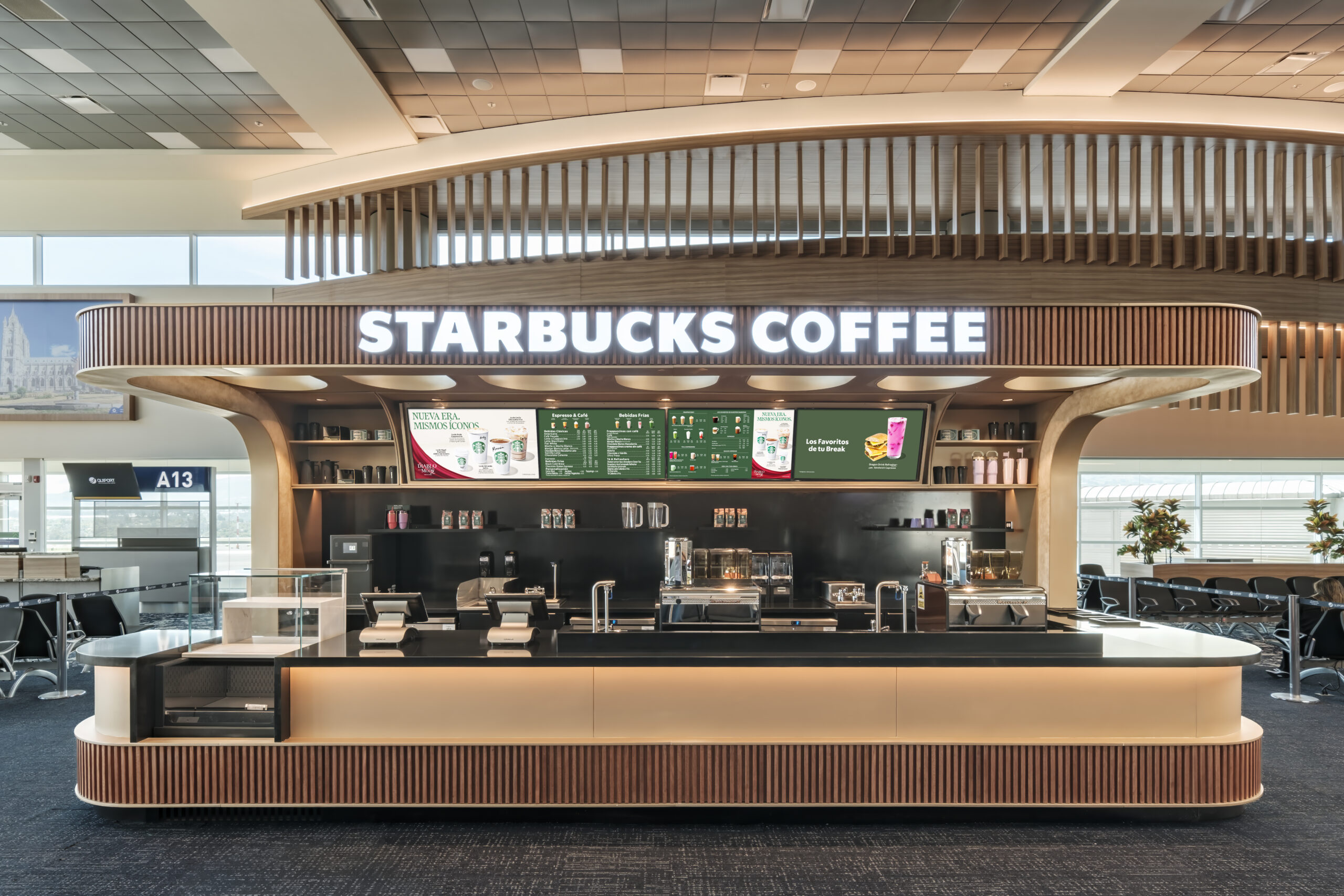
Around the world, airports are evolving far beyond transportation infrastructure. Many major airports are now becoming the centerpieces of large commercial ecosystems known as Airport Cities or Aerotropolises.
These developments combine aviation infrastructure with hotels, office districts, convention centers, logistics parks, retail environments, residential projects, and hospitality assets. As a result, airport cities are becoming increasingly attractive for Starbucks franchise and license development opportunities.
Airport City principle.
The strongest airport developments are no longer isolated terminals. They function as complete commercial ecosystems generating economic activity throughout the day and across multiple industries.
What is an Airport City?
An Airport City is a commercial district built around an airport that extends economic activity beyond passenger travel.
These assets create multiple customer segments rather than relying solely on airline passengers.
Why Airport Cities Matter for Starbucks.
Airport cities often combine many of the factors that support premium coffee and hospitality concepts.
This creates customer demand throughout the day instead of depending on one traffic source.
Airport City opportunity zones.
Tourism growth strengthens Airport Cities.
As international tourism expands, many governments are investing heavily in airport infrastructure and surrounding commercial development.
This often creates:
Airport Cities support multi-unit development.
One of the most attractive features of Airport Cities is that they can support multiple Starbucks locations across a single ecosystem.
Examples may include:
This creates opportunities for scalable development rather than isolated locations.
Strong operators remain essential.
Airport City opportunities require experienced operators capable of managing hospitality standards, logistics, staffing, customer service, and premium operational execution.
Groups with airport, hospitality, retail, or multi-unit management experience may be particularly well positioned to evaluate these opportunities.
Final thoughts.
Airport Cities are becoming some of the most important commercial ecosystems in the world. Their combination of travel, hospitality, business activity, retail development, and tourism growth creates highly attractive environments for Starbucks franchise and license expansion.
For serious developers and operators, Airport Cities represent one of the most strategically important opportunity categories within modern hospitality and retail development.
Have an Airport City opportunity?
Submit your airport district, aviation-linked development, hotel ecosystem, convention center project, or mixed-use airport opportunity for structured review.
Explore Airport Opportunities
Leave a Reply